
- the identified learning difficulty, disability or support need;
- how this directly affects the learner’s apprenticeship;
- the reasonable adjustments and specialist support to be provided;
- the purpose, frequency and expected duration of support;
- individual goals and intended outcomes;
- the roles and responsibilities of the learner, provider and support worker;
- review dates and measures of effectiveness; and
- the learner’s agreement and approval, with employer involvement where appropriate and consented.
Make Additional Learning Support easier to identify, deliver and evidence.
ONYSS gives apprenticeship training providers a connected pathway for inclusive learner support, from initial screening and Learning Needs Assessment to an agreed ILP, specialist 1:1 support, review and funding evidence.
It complements your apprenticeship MIS and delivery systems by managing the specialist support activity and evidence that often sits across spreadsheets, documents, emails and separate calendars. ONYSS does not deliver the apprenticeship itself.
Identify potential support needs early
Initial screening gives every learner an accessible opportunity to share how they learn and identify possible barriers. It can highlight indicators associated with learning difficulty, disability or neurodivergence and help the provider decide whether a more detailed assessment is needed.
Screening is an early identification tool. It does not provide a diagnosis and does not automatically establish eligibility for learning support funding. Provider staff retain responsibility for reviewing the outcome and deciding the appropriate next step.
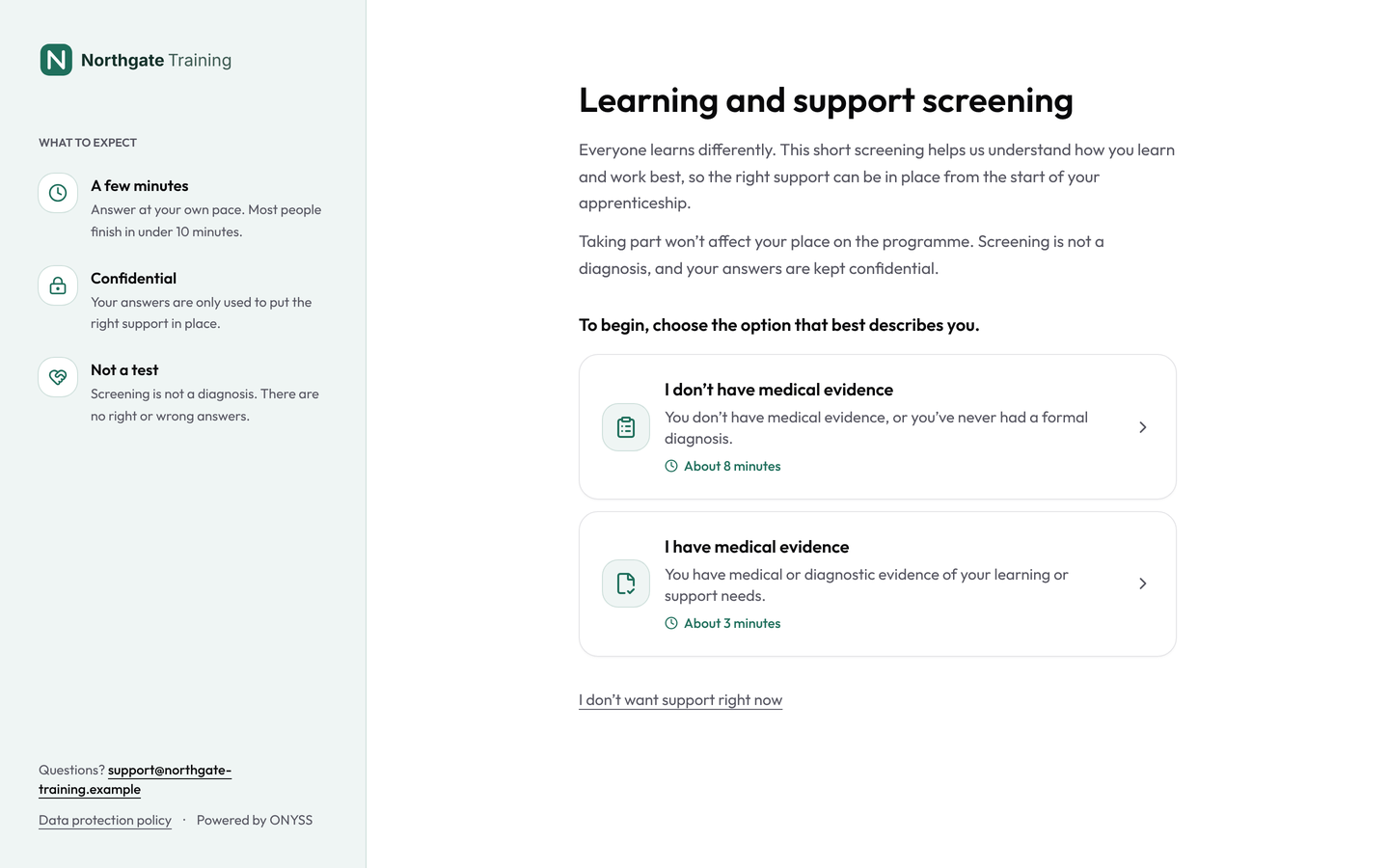
Learners start screening from their provider’s own link. Screening supports early identification; it is not a diagnosis.
Move from screening to a clear Learning Needs Assessment
Where potential needs are identified, a Learning Needs Assessment can explore the learner’s strengths, barriers and the direct impact of their learning difficulty or disability on completing the apprenticeship. The assessment records the evidence considered and identifies the reasonable adjustments and specialist support needed to enable participation and progress.
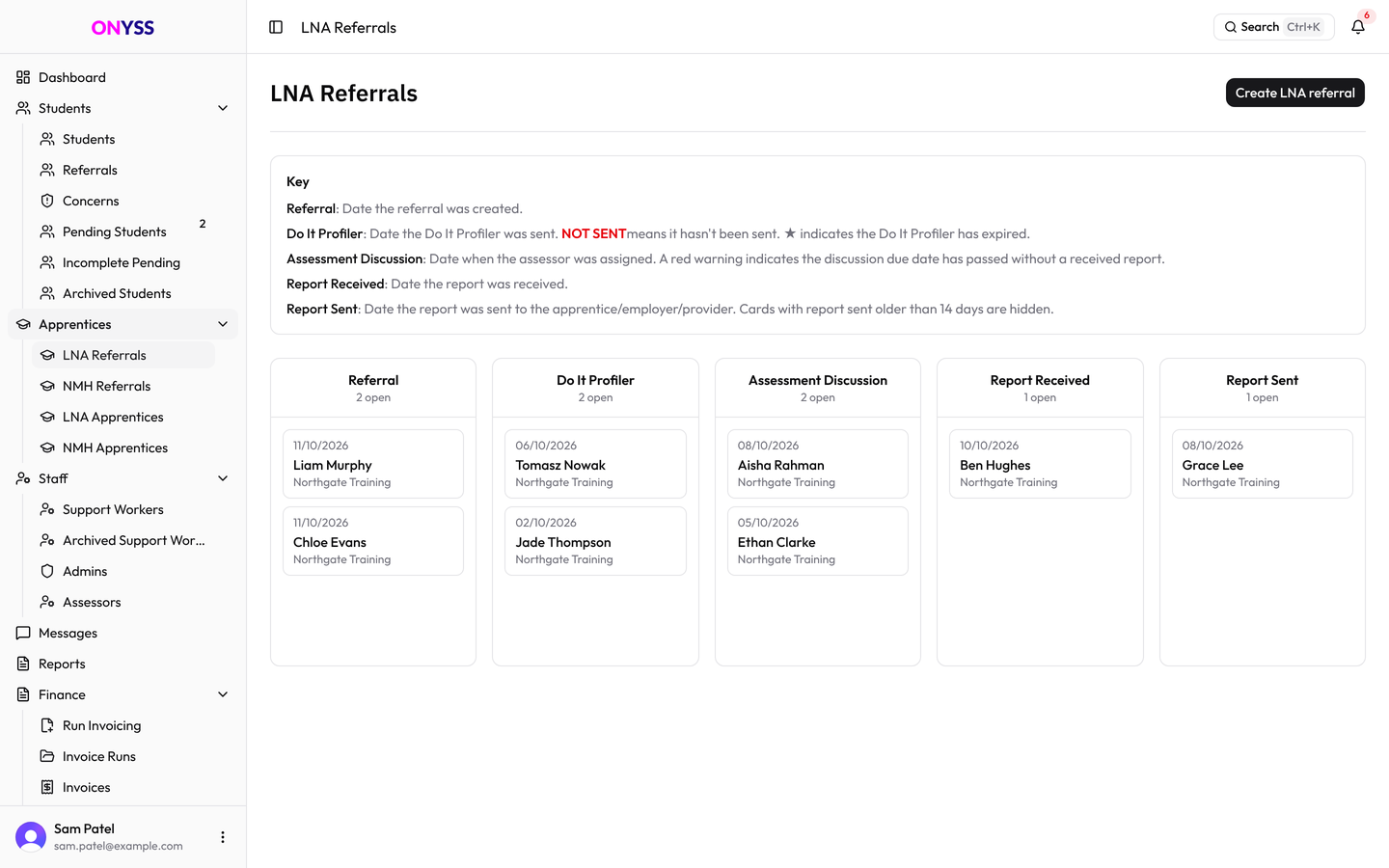
Each Learning Needs Assessment referral moves from referral and consent through to a sent report, with every stage visible.
Turn identified need into an individual support plan
ONYSS Individual Learning Plans connect the assessment outcome to delivery. Each ILP can set out:
Deliver specialist support with a consistent evidence trail
Support workers use ONYSS to manage appointments and record the support delivered. Session records connect the date, duration, attendance, activity, ILP goals, learner engagement, agreed actions and learner approval. This creates a clear chronology of what was provided and why.
Providers can monitor support without relying on retrospective updates from multiple spreadsheets or email chains. Outstanding records, missed appointments, Did Not Attend (DNA) records, review dates, hours and costs remain visible to authorised teams.
Support the evidence required for learning support funding
The apprenticeship funding rules require providers to evidence the learner’s need, the reasonable adjustments planned, the support delivered in each claimed month, the costs incurred where applicable and regular review of whether support remains necessary and effective. ONYSS brings these records together so they can be retrieved and reviewed as part of the provider’s funding evidence pack.
- Initial screening outcome and date
- Detailed assessment or Learning Needs Assessment where required
- Evidence of the direct impact on the learner’s ability to complete the apprenticeship
- Agreed reasonable adjustments and support plan
- Learner sign-off or approval
- Appointments, attendance and session records for claimed months
- Hours and actual support costs
- Invoices or cost evidence supporting EAS claims, where applicable
- Learning support reviews at least every three calendar months
- Evidence of effectiveness and any changes to the support plan
- A clear record of when support started, changed or ceased
The provider remains responsible for confirming eligibility, maintaining its complete evidence pack and making accurate and timely ILR and EAS submissions. ONYSS supports that responsibility; it does not make the claim or guarantee that funding will be paid.
Evidence inclusive practice for quality assurance and Ofsted
Funding evidence and quality evidence are related, but they are not the same thing. ONYSS helps leaders demonstrate how the organisation identifies individual needs and translates them into meaningful support, not simply that a funding code was entered.
Through the learner record, ILP, reviews and delivery history, authorised teams can demonstrate:
- how learners’ starting points and support needs are identified;
- how reasonable adjustments and specialist support are planned;
- how the support is personalised to the apprentice and their programme;
- whether the learner is engaging with support;
- how goals, progress and the effectiveness of adjustments are reviewed;
- how concerns, gaps or non-engagement are identified and acted upon;
- how support is adapted when the learner’s needs or circumstances change; and
- how leaders maintain oversight of the quality and consistency of inclusive practice.
ONYSS does not create an “Ofsted-compliant ILP” as a standalone document. It provides a live, evidence-based record of the assess, plan, do, review process. That is substantially more useful than a static form completed for inspection.
A clearer ALS pathway
- Referral or initial screening
- Review of screening outcome
- Further Learning Needs Assessment where required
- Reasonable adjustments and ILP agreed
- Specialist Study Skills and/or Mentoring allocated
- Appointments and support delivered
- Session evidence and learner approval recorded
- Progress and learning support reviewed at least every three calendar months
- Hours, costs and evidence checked against claims
- Support continued, adapted or closed in response to evidence
What providers gain
- Earlier identification of learners who may need support
- A consistent ALS pathway across teams and programmes
- Clearer evidence for monthly learning support claims
- Better visibility of engagement, hours, cost and review status
- A stronger account of inclusive practice for leaders, auditors and inspectors
- Less duplication between support delivery, quality and finance teams
- A learner-centred record that follows support through the apprenticeship